Fri, Jan 9, 2026
How Tempora Brought Its Museum Interactives In-House with PandaSuite
Interactive installations are now a cornerstone of modern exhibitions. They engage visitors, enhance storytelling, and transform passive observation into active exploration. But designing these experiences remains a major challenge: how can teams integrate meaningful interactivity without disrupting the narrative, the scenography, or the visitor journey while avoiding heavy reliance on external development agencies?
This is exactly the challenge taken on by Tempora, a Belgian company specializing in the design, production, and management of museum and exhibition experiences in Belgium and internationally.
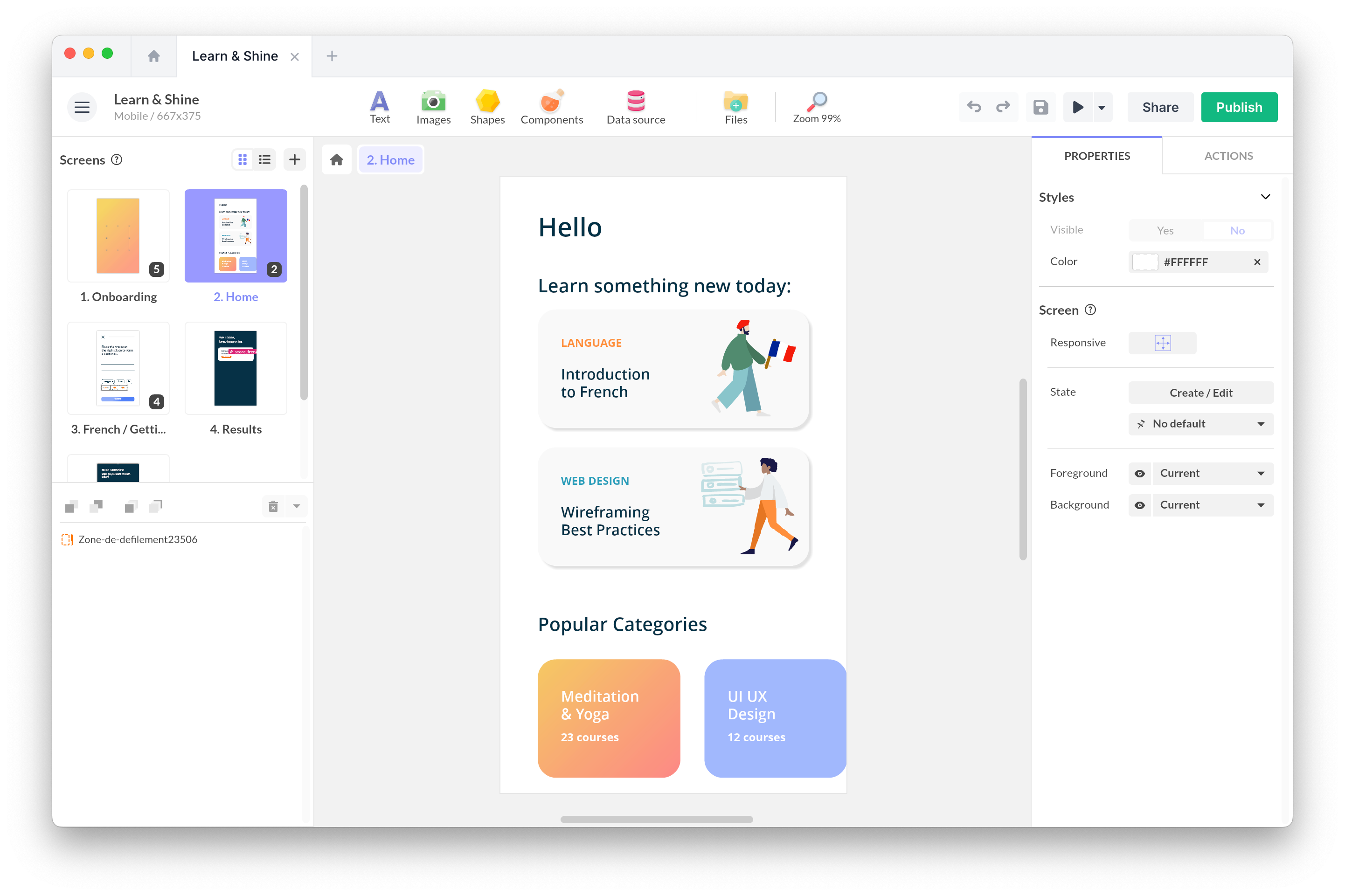
With a team of around fifty people, Tempora controls the entire exhibition production chain - from scientific storytelling and scenography to multimedia and interactive installations. To design and deploy its interactive screens and digital experiences, the team relies on PandaSuite, a no-code touchscreen software built for interactive storytelling.
At the center of this approach is André Ferreira, IT and multimedia manager, who oversees all digital components of Tempora’s exhibitions: touchscreen interactives, audiovisual content, exhibition websites, and even a smartphone-based audio guide accessed via QR codes. His objective is clear: to create playful, robust, and immersive interactive experiences that always serve the story.
Technology should never exist for its own sake. It has to tell a story and integrate perfectly with the scenography.
Before PandaSuite: Limited Tools and Heavy Dependence on External Providers
Before adopting PandaSuite, Tempora relied on two main approaches to create interactive installations.
For simple experiences, such as “point & click” interactions, André used BrightSign, a robust media player already deployed across exhibition routes. While reliable, this solution quickly reached its limits when more complex logic or gameplay was required.
For advanced interactives involving drag-and-drop mechanics, conditions, databases, or game logic, Tempora had no choice but to outsource development to external service providers, most often using Unity. Internally, the teams retained control over UX, content architecture, and graphic design, but the programming itself had to be outsourced.
I was looking for an alternative solution that would allow me to easily create an interactive without having to use a lot of code or programming.
Discovering a No-Code Tool That Matched Their Creative Ambitions
PandaSuite entered the picture almost by chance. A colleague shared a link, André explored the website, downloaded the application, watched tutorials and decided to test it.
I tried it without too many expectations. Very quickly, everything became clear: it was the most suitable solution for our needs, especially for our use cases.
The first real-world test took place during the Robert Doisneau exhibition, with an interactive puzzle combining information content and time management mechanics. The success of this project internally opened the door to a much more ambitious challenge: the Pompeii exhibition, rich in interactive installations.
I just needed that little extra to translate my graphic creations into functional productions. That’s where exactly where PandaSuite met my expectations.
Pompeii: Eight Interactives, Four Major Games, and a Skills Leap
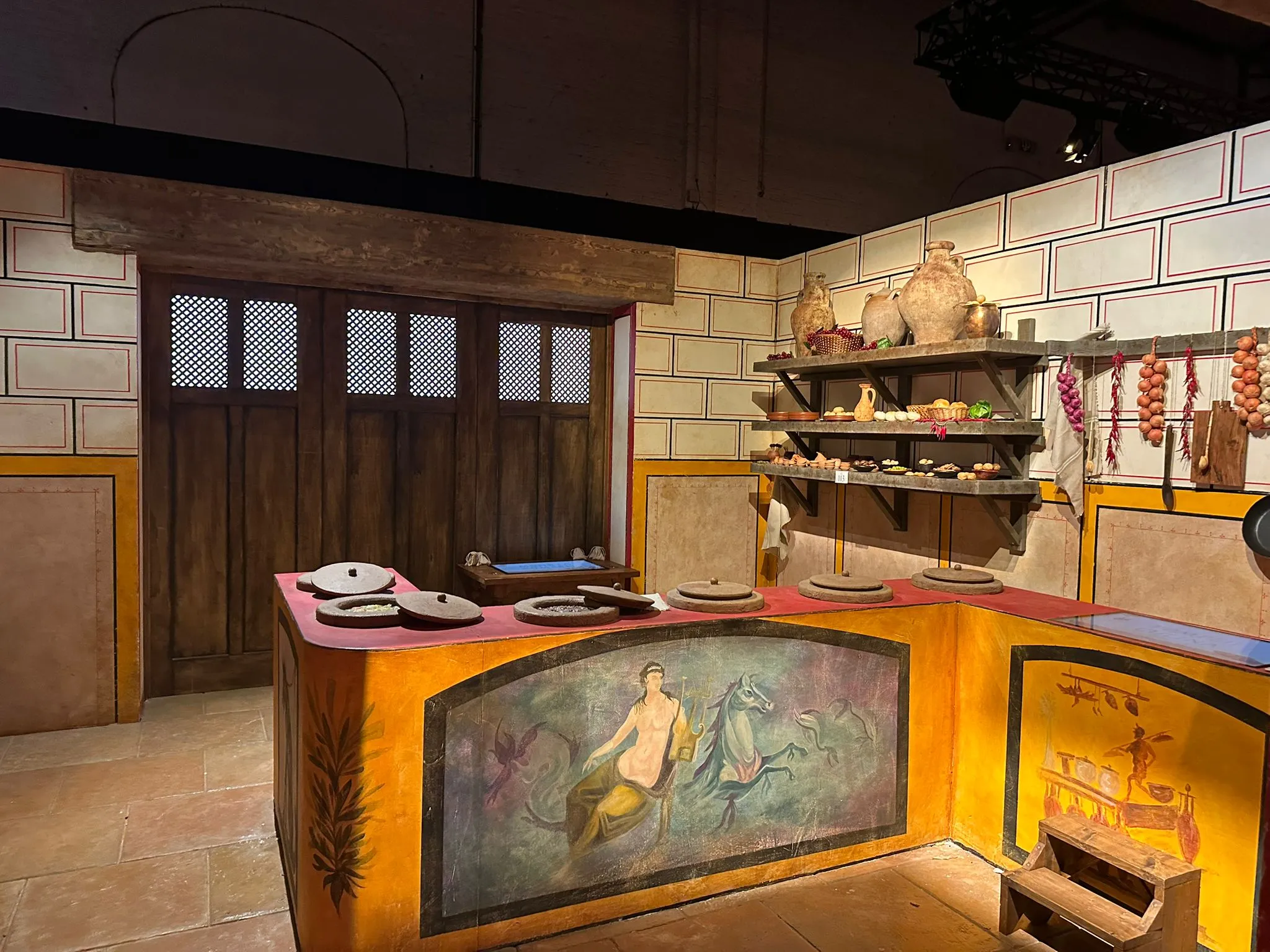
For the Pompeii exhibition, Tempora designed eight interactive games, including four complex games. While André was confident in PandaSuite’s capabilities, he initially questioned whether he could fully leverage its advanced features.
The first game focused on cereals known to the Romans. Visitors had to match labels to the images, validate their answers, and reach a success screen, introducting conditional logic and progression states. This project marked a turning point, particularly thanks to PandaSuite’s support team.
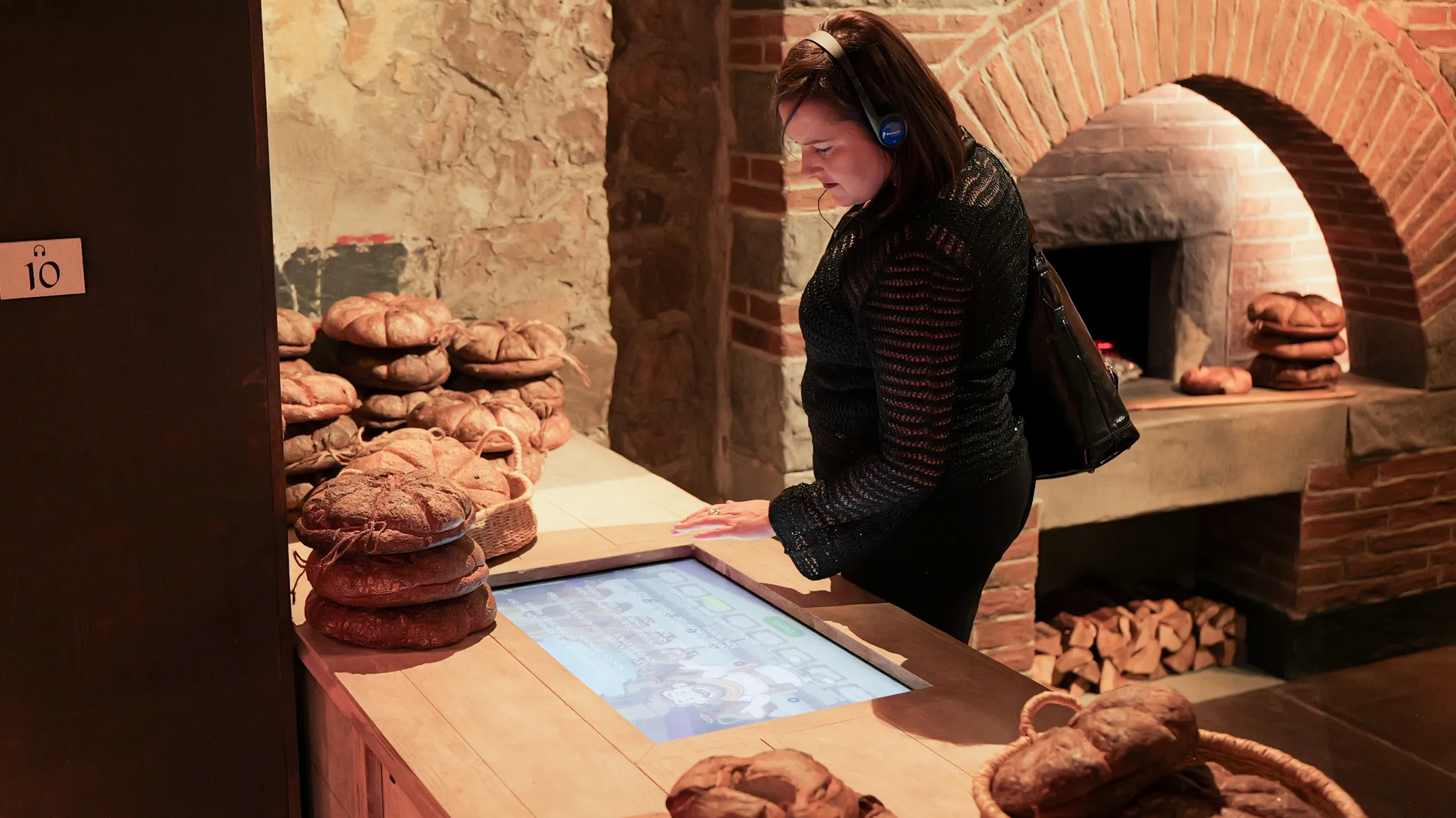
Support immediately pointed me in the right direction. From there, I was able to enrich the interactive myself.
Encouraged by this success, André transformed another planned “point & click” into a full budget management game. Visitors choose a character, drag and drop expenses, manage a limited purse that empties in real time, and receive personalized endings based on their decisions, all driven by a centralized database.
This money game really helps visitors understand how different daily life was back then.
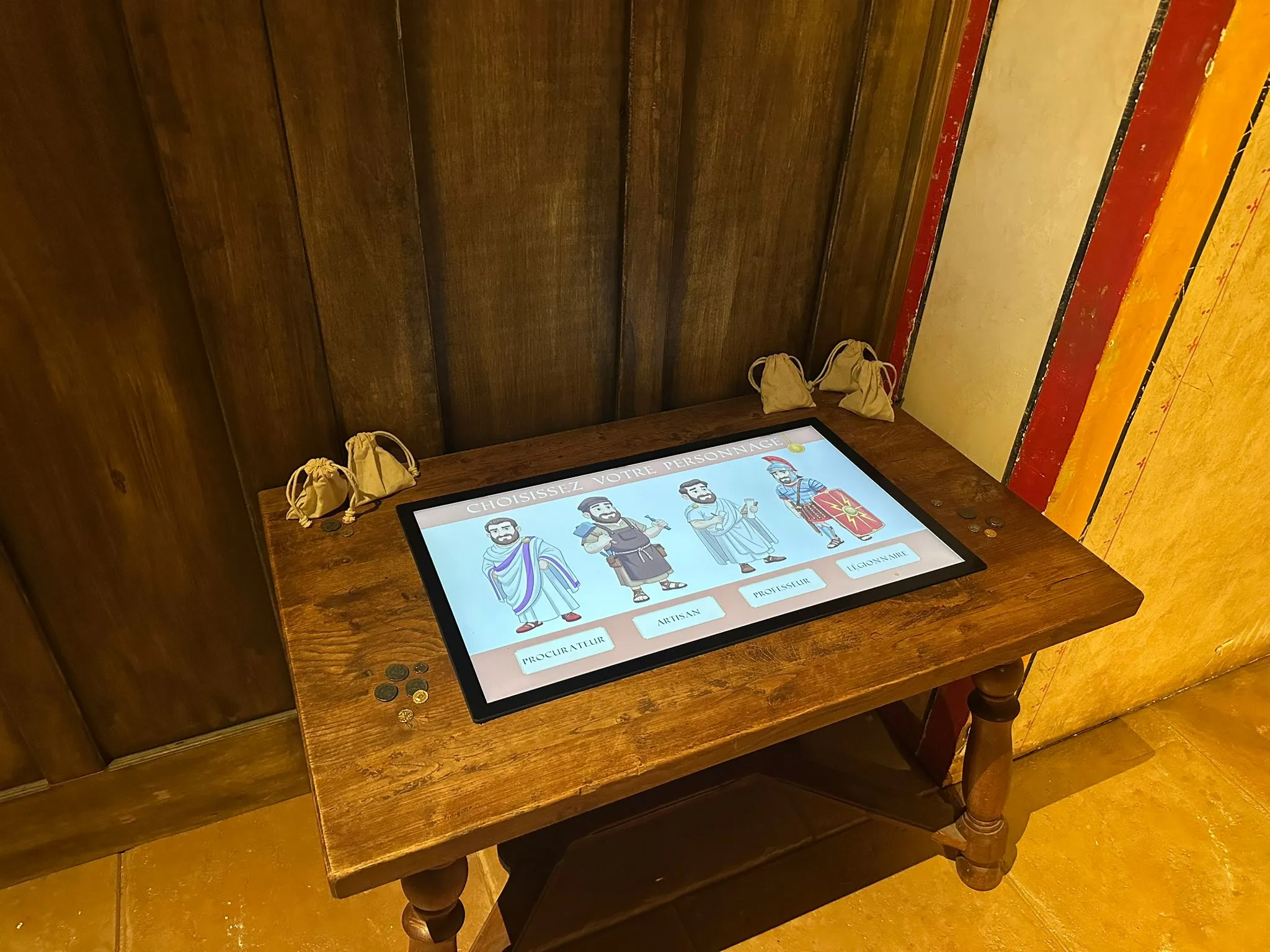
Two additional games completed the installation:
- a memory game based on Roman leisure activities
- a cooking game centered on ingredient hunting.
Both were built using reusable logic. As a result, while the first interactives took several days to produce, subsequent ones were completed much faster.
I spent more time producing the graphic assets than making the interactive itself.
Testing, Refining, and Designing Games Around Storytelling
Each interactive is tested internally and then with external users—including children—to validate comprehension, ergonomics, and engagement. Most refinements focus on clarifying instructions and improving the fluidity of the experience.
André approaches interactive design with a mindset inspired by video games, where mechanics and narrative reinforce one another.
The goal is for visitors to feel like actorswithin the story, not just spectators.
Visitor feedback for the Pompeii exhibition has been overwhelmingly positive, highlighting both the educational value and the playful nature of the installations.
PandaSuite as a Long-Term Creative Partner
Beyond the no-code tool itself, André emphasizes the importance of the relationship with the PandaSuite team.
What I really appreciated was being able to discuss all my interactives with you. You had a direct view of my projects, and with a simple email exchange, you could immediately point me in the right direction. That was invaluable.
Today, André actively recommends PandaSuite to other multimedia, museum, and exhibition professionals. For him, the platform is clearly designed for creative teams who want to build custom, robust museum interactives without development skills.
Thanks to PandaSuite, Tempora has been able to internalize the creation of complex museum interactives, reduce its dependence on external providers, and gain agility, all while staying true to its scenographic standards.
👉 Discover PandaSuite and explore other use cases on pandasuite.com